Written By: Hyatt Tullu, Commercial Real Estate Intern, 2025
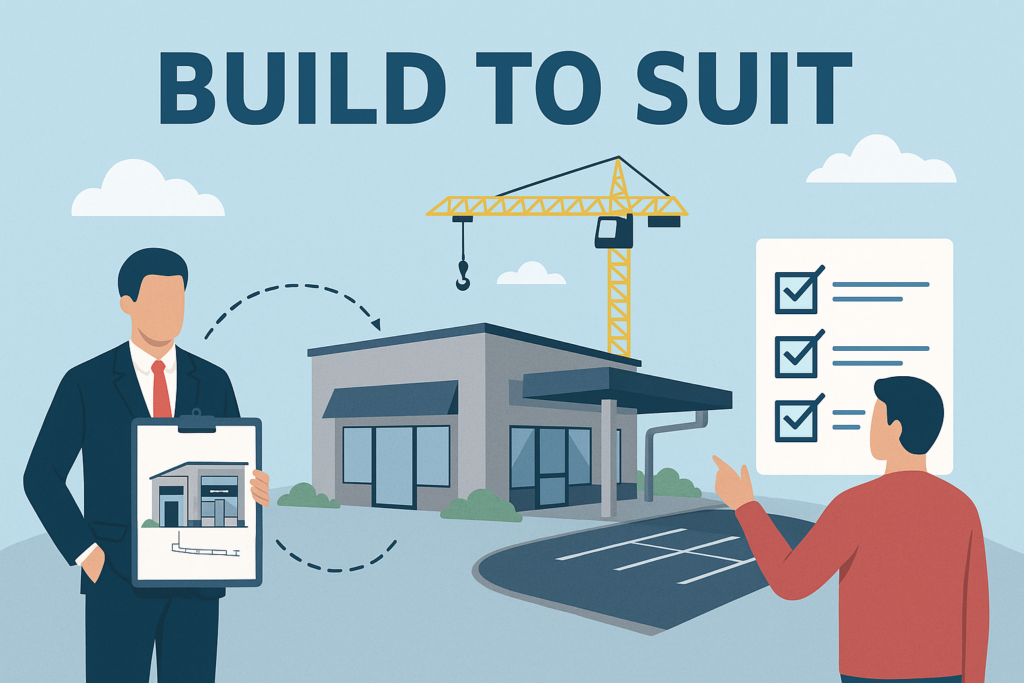
A build-to-suit deal is a common structure in commercial real estate where a developer
constructs a building specifically tailored to meet the needs of a tenant, who then agrees to
lease the property upon completion. Unlike speculative development, where a developer builds
a property without a signed tenant and hopes to lease it later, a build-to-suit begins with a lease
commitment in place, providing certainty for both parties.
How It Works
In a typical build-to-suit arrangement, the developer and tenant negotiate and execute a
lease before construction begins. The tenant outlines its space requirements, design
specifications, and operational needs, and the developer agrees to deliver a building that meets
those criteria. This could include factors like the building’s size, layout, materials, parking,
drive-throughs, or even special mechanical systems.
The lease term for a build-to-suit is usually longer than a standard lease, often 10, 15, or
even 20 years, since the building is designed for that specific tenant and may have limited
appeal to others without modifications.
Why Tenants Choose Build-to-Suit
Tenants benefit from a build-to-suit because they get a property that aligns perfectly with
their brand standards and operational requirements, without having to own the real estate
themselves. For example, a national retailer or restaurant chain expanding into a new market
may prefer a build-to-suit to ensure consistency with their existing locations.
Why Developers Like Build-to-Suit
Developers rarely build on speculation without a tenant in place because of the high
risks involved. Build-to-suit projects involve higher upfront costs and greater risk compared to
ground lease deals, but they also offer the potential for higher returns. With a build-to-suit,
developers secure a long-term lease before construction starts, which reduces leasing risk by
guaranteeing income. However, this approach requires more capital and commitment upfront,
balancing increased risk with the opportunity for better returns.
Key Considerations
While build-to-suit deals provide certainty, they require close collaboration between the
developer and tenant throughout design and construction. Timelines and budgets are tracked
with tenants requiring approval and permit deadlines, and contracts can include fixed rent
commitments that limit budget flexibility. Developers also assist tenants in opening new
locations faster, supporting better capital allocation. Additionally, the developer must plan for
the possibility of re-leasing the property if the tenant leaves—especially when the building’s
design is highly specialized as this can impact the development’s market value.
Final Thoughts
Build-to-suit remains a popular strategy because it aligns tenant and developer goals,
allows the Tenant to focus solely on their business and allocate capital to their operations,
while the developer delivers tailored spaces meeting specific requirements.
At M Square Commercial, we guide clients through the complexities of build-to-suit
projects—from negotiating leases and managing timelines to ensuring budgets stay on track.
Our market insight and hands-on involvement help both developers and tenants achieve
successful outcomes that meet their objectives.
The post Insights Into a Build-to-Suit: What Is a Build-to-Suit Deal in Commercial Real Estate? first appeared on M Square Commercial.
The post [#item_title] first appeared on M Square Commercial.