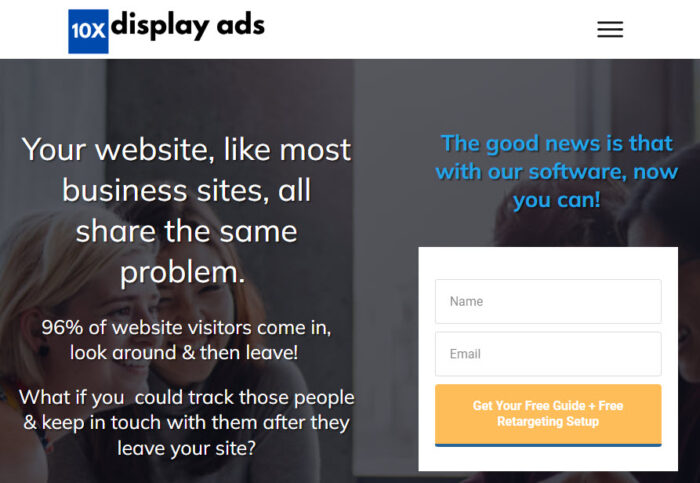
Most real estate websites have the same problem. People visit. They look around. Then they leave.
For brokers, owners, developers, and marketers, that creates a huge leak in the system. You spend time and money getting people to your website through SEO, Google searches, property pages, email, social media, or listing platforms. But if those visitors leave without calling, filling out a form, or booking a meeting, most of that opportunity disappears.
Real estate display ads change that.
When used correctly, display ads and retargeting ads help you stay in front of prospects after they leave your website. That means your brand, your listings, your services, and your message continue showing up across the internet while those prospects keep researching. Instead of being forgotten, you stay top of mind.
This is why display ads can produce extraordinary returns. They help turn lost website traffic into leads, inquiries, calls, meetings, and deals.
What Are Real Estate Display Ads?
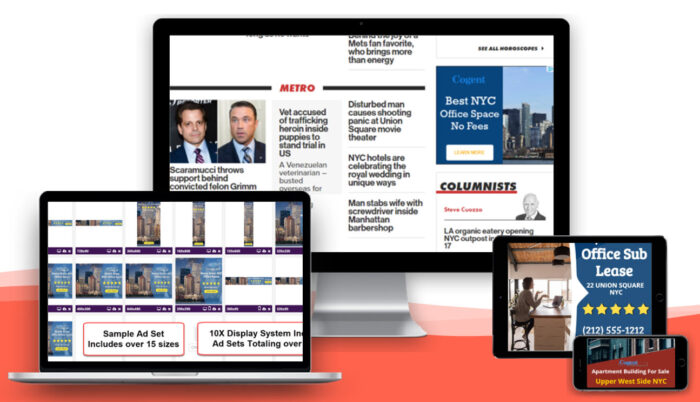
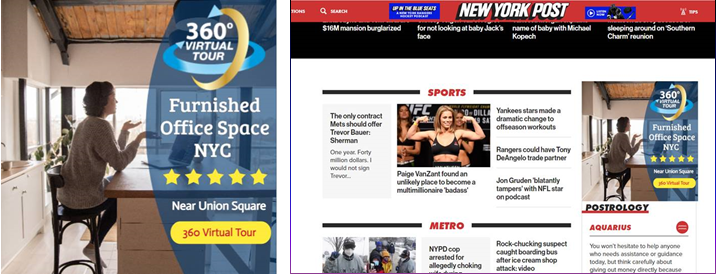
Real estate display ads are online banner ads, image ads, and visual ads that appear across websites, news platforms, blogs, and apps. These ads can be used to promote office space, investment properties, apartment buildings, retail space, land listings, development sites, and brokerage services.
For commercial real estate brokers and property owners, display ads can be used in two powerful ways:
-
to target new prospects who fit a specific profile
-
to retarget people who already visited your website
That second use is where the real magic happens.
A person lands on your website, reads a page about office space, a property listing, or a market report, and leaves. With a retargeting pixel in place, that visitor can continue seeing your ads across the web afterward. This gives you a second, third, fourth, and fifth chance to stay in front of them.
How Retargeting Ads Work for Real Estate Websites

Retargeting ads work by placing a small tracking pixel on your website. When someone visits a page on your site, that pixel can add them to a custom audience. After they leave, your ads can be shown to them while they browse other websites.
This is the same basic reason people look at a product on Amazon, leave, and then see that same product appear on other sites.
In real estate, the same principle can be used for:
-
office space listings
-
retail space listings
-
apartment building marketing
-
land and development sites
-
investment sales opportunities
-
tenant representation services
-
owner representation campaigns
-
broker branding and lead generation
The result is simple: you do not lose contact just because the visitor left your website.
Why Real Estate Website Traffic Is Often Wasted

A large percentage of website visitors never convert on the first visit. That is especially true in commercial real estate, where deals are larger, decisions take longer, and prospects often compare multiple properties, brokers, and options before they act.
Someone may visit your page today and not take action for weeks or months.
That does not mean the traffic was bad. It means the timing was not right.
Without display advertising or retargeting, that visitor may forget your name, forget your website, or find another broker later. With retargeting ads, you continue showing up while they move through the decision-making process.
This can make a major difference in industries where trust, repetition, and visibility matter.
How Display Ads Generate More Real Estate Leads
Display ads generate more leads because they extend the value of your existing traffic.
Instead of treating every website visit as a one-time event, display ads allow you to keep marketing to interested prospects after they leave. This improves recall, reinforces credibility, and creates more chances for someone to come back and inquire.
Here is what display ads can do for a real estate business:
-
bring back lost website visitors
-
keep your listings in front of prospects
-
increase brand recognition
-
generate more calls and inquiry forms
-
create more repeat exposure in competitive markets
-
support longer sales cycles
-
help brokers stay top of mind without cold calling
For many brokers, this is one of the most practical ways to get more value from SEO and content marketing.
Real Estate Display Ads vs Real Estate SEO

Real estate SEO and real estate display ads work best together.
SEO helps you get found when people search for things like office space for lease, apartment buildings for sale, development sites, warehouse properties, or local brokerage services. Good SEO can drive highly relevant traffic to your site.
Display ads help you keep that traffic engaged after the first visit.
SEO gets the click.
Display ads help you stay visible after the click.
That is why the combination is so powerful. A broker may rank well for a building page, a neighborhood office space page, or a local market article. But without retargeting, many of those visitors disappear forever. With retargeting, those same visitors can keep seeing the broker’s brand, listings, and message as they continue their search.
How CRE Brokers Can Use Display Ads
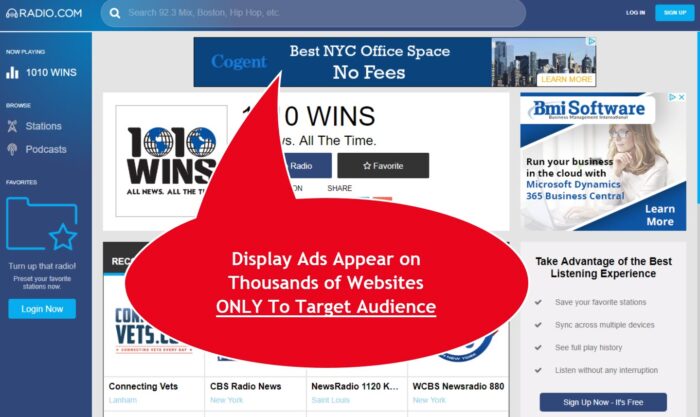
Commercial real estate brokers can use display ads in highly targeted ways.
A tenant rep broker can target businesses searching for office space in a certain size range, neighborhood, or budget category. An investment sales broker can stay in front of buyers looking at multifamily, retail, industrial, or net lease opportunities. A land broker can use display ads to stay visible with developers and investors researching a market over time.
Display ads can also support broker branding. If someone visits your article, market report, or listing page, your ads can continue appearing and reinforcing your authority.
This is especially helpful for brokers who want to build an exclusive listing business. Repeated visibility makes you look more established, more credible, and more present in the market.
How Property Owners Can Use Display Ads to Market Buildings

Property owners can also use display ads to market buildings, attract tenants, and stay visible with brokers and prospects.
If an owner has office space, retail space, flex space, industrial space, or multifamily opportunities, display ads can keep that property in front of interested people after they visit the website. This can be especially useful for properties with longer leasing cycles or specialized buyer pools.
Instead of relying on a one-time website visit, the owner can remain visible throughout the prospect’s research process.
That means the property is not just another building sitting quietly in the market. It stays active in the prospect’s mind.
Cold Traffic Ads vs Retargeting Ads in Real Estate Marketing

There are two main categories of display advertising in real estate marketing: cold traffic ads and retargeting ads.
Cold traffic ads are shown to people who have never visited your website before. These are used to introduce your brand, listing, or service to a carefully targeted audience.
Retargeting ads are shown only to people who already visited your website. These are often more effective because the audience has already expressed interest.
A strong real estate marketing strategy often uses both.
Cold traffic ads bring in new people.
Retargeting ads keep following up after the click.
Once someone visits the site, the cold traffic ad job is done. The retargeting ad then takes over and keeps the conversation going.
Why Niche Targeting Improves Ad Performance

One of the biggest mistakes in digital advertising is being too broad.
In real estate, better results usually come from being more specific.
A campaign aimed at “everyone looking for space” is weaker than a campaign aimed at law firms seeking 1,000 to 5,000 square feet in Midtown Manhattan. A campaign aimed at “investors” is weaker than a campaign aimed at multifamily buyers in a specific region.
The more defined the audience, the better the message can match what they want.
Niche targeting can include:
-
location
-
property type
-
deal size
-
square footage
-
industry profile
-
search behavior
-
investor type
-
tenant type
That is where conversions improve. The goal is not maximum traffic. The goal is qualified traffic.
What Makes a Real Estate Display Ad Convert Better

A real estate display ad performs better when it is clear, relevant, and specific.
Strong display ads usually include:
-
a direct headline
-
a recognizable location or building
-
a relevant image
-
a niche-specific message
-
a clear call to action
-
a landing page that matches the ad
For example, an ad about office space near Grand Central will usually perform better if it speaks directly to companies seeking office space in that area, includes a clear size range, and clicks through to a useful landing page with pricing, floor plans, photos, and building details.
Good ads get attention.
Good landing pages convert that attention.
Why Repetition Matters in Real Estate Advertising

In real estate, people rarely make a major decision after one touch.
They research.
They compare.
They delay.
They revisit.
That is why repetition matters.
Display ads create repeated visibility in a way that helps you remain familiar and credible. When someone sees your brand multiple times, your listings multiple times, or your message multiple times, you are more likely to be remembered when they are ready to act.
That repeated exposure is one reason display ads can outperform many one-touch marketing tactics.
How Display Ads Help Brokers Get Exclusive Listings

Display ads are not only useful for attracting buyers and tenants. They can also help brokers position themselves to win exclusive listings.
A broker with strong SEO pages, strong market content, and a retargeting strategy can look far more visible than competitors who rely only on cold outreach. When owners repeatedly see the broker’s name, ads, content, and market presence, that broker can appear more established and more capable of generating attention.
Owners want exposure.
Owners want a plan.
Owners want confidence that a broker can market the asset aggressively.
Display ads support that story.
They show that the broker has a system for staying in front of the market, not just putting a listing online and hoping.
Why Display Ads Can Produce a High ROI
Display ads can produce a high return on investment because they help extract more value from traffic you already earned.
If you are spending money on SEO, websites, email campaigns, Google Ads, social media, listing platforms, or content creation, then losing visitors after the first click is expensive. Retargeting helps you recapture more value from those efforts.
That is why ROI can become so attractive.
Instead of constantly paying for brand-new attention, you keep working the attention you already won.
For brokers, owners, and marketers, this can mean more efficient lead generation and more business from the same traffic base.
The Best Real Estate Marketing Strategy Uses SEO, Content, and Display Ads Together
The strongest real estate marketing strategy is not one tactic by itself.
It is a system.
A useful website with strong content attracts the right traffic.
SEO helps that content rank in Google.
Display ads and retargeting keep you in front of people after they visit.
That combination can create a major advantage in competitive markets.
It helps you stop wasting traffic.
It helps you stay top of mind.
It helps you generate more leads from the visitors you already worked hard to attract.
If you are serious about building a real estate business online, display ads should not be treated as an afterthought. They should be part of the core strategy.
Frequently Asked Questions About Real Estate Display Ads
What are real estate display ads?
Real estate display ads are visual online ads used to promote properties, brokerage services, market reports, or real estate brands across websites and apps. They can be used for both prospecting and retargeting.
How do retargeting ads work for real estate websites?
Retargeting ads work by using a tracking pixel on your website. When someone visits your site, they can be added to an audience and later shown your ads across other websites after they leave.
Do display ads help generate real estate leads?
Yes. Display ads can help generate real estate leads by bringing back lost website visitors, increasing brand recognition, improving recall, and creating more chances for prospects to return and inquire.
Are display ads good for commercial real estate brokers?
Yes. Display ads are especially useful for commercial real estate brokers because many deals involve long decision cycles. Retargeting helps brokers stay visible while prospects continue researching office space, investment properties, land, or other opportunities.
What is the difference between display ads and retargeting ads?
Display ads is the broad category of visual ads shown online. Retargeting ads are a type of display ad shown specifically to people who already visited your website.
How do display ads support real estate SEO?
Display ads support real estate SEO by helping you get more value from organic traffic. SEO brings visitors to your website, and display ads help keep your brand in front of them after they leave.
Can property owners use display ads to market buildings?
Yes. Property owners can use display ads to market office buildings, retail space, industrial space, apartment properties, and development sites by staying visible with prospects and brokers after they visit the property website.
What types of real estate businesses benefit from display ads?
Tenant representation brokers, investment sales brokers, landlords, developers, property owners, financial companies, and real estate marketing agencies can all benefit from display ads and retargeting.
Why do display ads have a high ROI in real estate marketing?
Display ads can have a high ROI because they improve the conversion potential of traffic you already paid for or earned through SEO, content, listing platforms, and other marketing channels.
What is the best use of display ads in real estate marketing?
The best use of display ads in real estate marketing is often retargeting. Retargeting helps you stay top of mind with people who already showed interest by visiting your website, listing pages, or market content.